


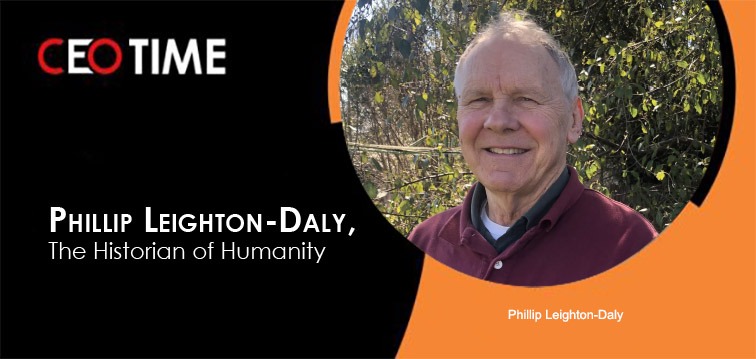
Phillip Leighton-Daly: The Historian of Humanity
In an age increasingly governed by digital ephemera and cultural amnesia, writers who bear witness to the subtle textures of human life have become rare. Rarer still are those who devote their careers to preserving the contours of memory, morality, and meaning. Among this distinguished, dwindling fraternity stands Phillip Leighton-Daly, author, educator, historian, and indefatigable guardian of Australia’s social and natural heritage.
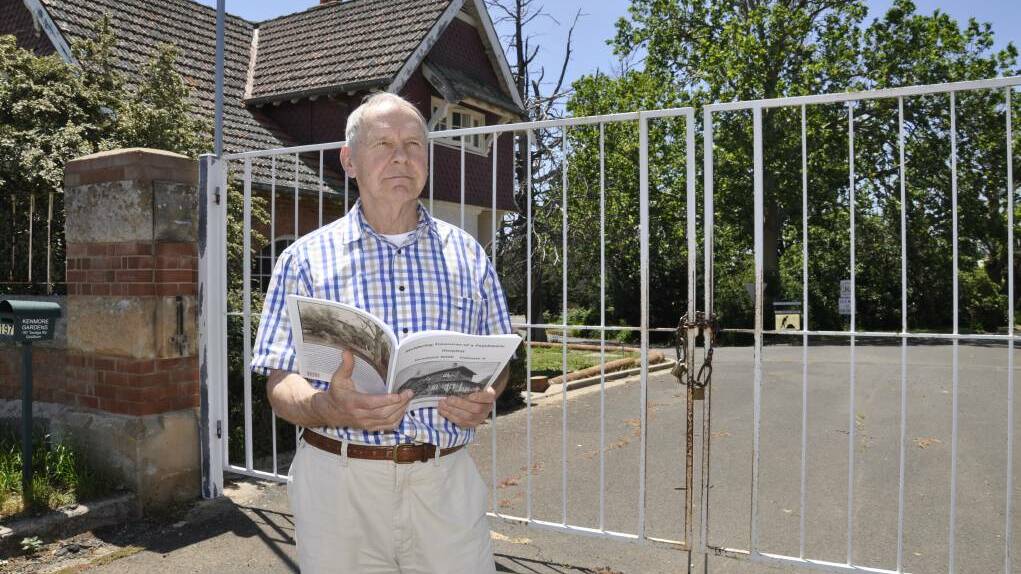
His story is not merely the chronicle of a writer’s evolution; it is a sweeping testament to survival, service, imagination, and the enduring nobility of human character.
Across 24 published works spanning fiction, non-fiction, regional histories, environmental studies, and young-adult adventures, Phillip has created an archive of narratives that honour the landscapes, communities, and moral lessons that shaped him.
This is not simply the life of an author.
It is the odyssey of a man who transformed adversity into empathy, experience into imagination, and observation into legacy.
I. Beginnings: A Child of War’s Shadow
Phillip’s life commenced under circumstances both emotionally complex and socially revealing. In post-WWII Australia, unmarried mothers were prohibited from keeping their infants, a harsh decree of the era’s moral rigidity. Immediately after birth, he was handed to the Anglican Church, an act that would later echo through his writings with nuanced reflections on belonging, identity, and resilience.
His adoptive parents, Bruce and Margaret Daly, were themselves forged in the crucible of global conflict. Their wartime experiences imbued Phillip’s upbringing with a profound reverence for sacrifice and service.
The Daly Legacy
- Bruce Daly, who left school at 13, served with the legendary 39th Battalion in New Guinea. Before facing the Japanese in the unforgiving Owen Stanley Mountains, he contracted malaria and was evacuated by Sunderland flying boat to Australia. His nurse Margaret Love would later become his wife.
- Margaret Daly, steadfast and courageous, served in war hospitals, tending to the wounded and the dying with emotional fortitude that would inspire Phillip for decades.
The couple earned six war medals between them, medals Phillip proudly carried during ANZAC marches for many years. Through them, he inherited an unshakeable sense of honour, duty, and gratitude values that pulse through the heart of his fiction.
II. The Gosford Years: Waterways, Wilderness, and the Making of a Storyteller
Phillip’s childhood home, Gosford, on the NSW Central Coast was a place where land, water, and history converged. Once a picturesque tourist haven, Gosford was steeped in colonial heritage and surrounded by the majestic waterways of Brisbane Water. Shipbuilders, orchardists, boatmen, and fishermen thrived there. It was, for a young boy with imagination to spare, a living treasure chest.
During the 1950s, his mother managed a boatshed for the Sea Scouts. Days were spent sailing, fishing, camping, swimming, and exploring the riverine labyrinth that became his backyard.
Phillip describes this period as his personal Tom Sawyer era a world of innocent adventure and natural wonder that would later enliven many of his fictional settings.
His sporting life flourished too cricket, baseball, tennis, and rugby league. These activities helped shape his understanding of discipline, camaraderie, and character qualities that would inform both his leadership and his literary voice.
III. A Life of Service: 45 Years of Teaching Across Four Regions
Phillip’s professional journey is as expansive as the landscape of New South Wales itself. Across a remarkable 45-year career in education, he taught in all four geographical regions of NSW:
- the craggy, riverine coast,
- the stark tablelands,
- the undulating western slopes, and
- the lonely, remote western plains.
Each region introduced him to distinct topographies, cultures, and communities—from orchardists to miners, ranchers to beekeepers, boatmen to oyster farmers. These communities did not merely surround him; they became his teachers, his inspiration, and eventually, his fictional characters.
Roles That Defined His Legacy
- Infant/primary school teacher
- Small school principal
- Educator in mainstream, special-needs, and multi-stage classrooms
- Austswim-certified swimming and survival instructor (30 years)
- Holder of six Bronze Medallion lifesaving awards
Extraordinarily, Phillip personally taught both his children for their entire infants and primary education, a rare blend of professional and parental devotion.
His Educational Philosophy
Phillip’s teaching ethos reflects the values inherited from his parents:
“A one-teacher classroom is tantamount to a model family, rooted in empathy, honour, respect, charity, and care.”
This philosophy later crystallised into the moral architecture of his fiction, where characters are often defined not by their triumphs but by their humanity.
IV. From Chronicler to Creator: A Writer Emerges
Phillip became an author not by ambition but by invitation. A school inspector once remarked on his excellent writing, sparking a friend to encourage him to record his early life in Gosford.
A single suggestion ignited a 25-year literary journey.
His earliest works (2000–2015) focused on:
- personal recollections,
- local histories,
- the social narratives of regional residents, and
- environmental studies, including a comprehensive 200-page volume on district trees.
His landmark 250-page book, Woollybutts and Wrinkled Armpits, remains a testament to his extraordinary understanding of botany, natural history, and their cultural significance. These insights permeate many of his fiction works, adding texture and authenticity to his settings.
The Goulburn Chronicles
Phillip’s thirteen non-fiction titles place him among the foremost contributors to Goulburn’s regional history. Four of these works advocate for the preservation of the former Goulburn Psychiatric Hospital, now at risk from vandalism, neglect, and opportunistic developers.
For Phillip, this cause is deeply personal:
“The wanton destruction of the chapel where my mother once comforted wounded soldiers was unbearable.”
His advocacy through literature stands as an example of how writers can serve as custodians of heritage.
V. Fictional Worlds with Moral Compasses
Phillip’s eleven fiction works, often classified as young adult or adult adventure stories, are marked by their moral clarity and thematic resonance. Among his most acclaimed titles are:
- The Fisherman and His Foundlings
- Against the Tide
- Honourable Thieves
- The Foundlings and the Fisherman of Tumby
Highly favourable reviews across platforms, including AI-generated literary analyses, reveal that his novels are celebrated for:
- rich worldbuilding,
- virtuous characters,
- emotional depth,
- environmental detail,
- historical resonance, and
- compelling adventure arcs.
His characters are not mere constructions; they are amalgamations of real people he observed across decades:
- miners with weather-beaten wisdom,
- fishermen with stories etched in tide and salt,
- beekeepers with mystical knowledge of nature,
- ranchers hardened by drought and devotion.
Phillip’s own maxim encapsulates his fascination with human quirks:
“There are none so queer as folk.”
VI. Influences: The Literary Giants Who Shaped His Pen
Phillip cites a formidable constellation of literary influences, each known for piercing insight and moral force:
- Oscar Wilde
- George Orwell
- Ernest Hemingway
- Charles Dickens
- Rod Serling
- Larry McMurtry
From Wilde, he learned of hypocrisy.
From Orwell, moral clarity.
From Hemingway, concision and courage.
From Dickens, empathy.
From Serling, prejudice and recrimination.
From McMurtry, frontier realism.
Yet Phillip’s voice remains distinctly his own, a fusion of Australian ruggedness, historical awareness, and an abiding fascination with human virtue.
VII. Motivation: The Quiet Fire of Achievement
When asked what motivates him today, Phillip responds with refreshing honesty:
“I am not motivated to write anymore. My energy now lies in promotion and refinement.”
At 74, he finds meaning in reflecting upon his body of work, drawing encouragement from past achievements, and honouring the labour that produced them. His motivation comes from showcasing mankind’s virtuous potential.
VIII. Adaptability and the Digital Age
Unlike many veterans of his generation, Phillip embraces digital platforms, particularly LinkedIn, where he has cultivated a loyal following for more than six months.
His posts are incisive commentaries on:
- hypocrisy,
- inequality,
- moral decay,
- societal contradictions,
- greed,
- divisiveness.
Yet they are equally rich with encouragement, book promotions, historical insights, and reflections on the virtues embodied by his characters.
For Phillip, social media is a means of comparing the virtuous and the despotic.
IX. Leadership: A Philosophy of Example, Not Instruction
Phillip summarises his leadership style with succinct clarity:
“Do as I do. And follow my example.”
He leads through conduct rather than decree, through narrative rather than authority.
His characters mirror the values he upholds in real life:
- resilience
- compassion
- honour
- trustworthiness
- selflessness
- courage
- perseverance
In a world preoccupied with ambition and acquisition, his stories remind readers of the timeless worth of moral integrity.
X. Partnerships That Mattered
Among the few collaborations Phillip deeply treasures is his relationship with Dr Chikodi Adeola Olasode, a gifted scriptwriter who adapted two of his works into cinematic scripts.
Navigating the U.S. publishing landscape has been exceedingly challenging for him, often marred by deceitful intermediaries and exploitative service providers. Dr Olasode’s professionalism and sincerity proved to be an invaluable exception.
XI. Lessons from Failure: Trust Carefully, Believe Firmly
Phillip acknowledges that misplaced trust in fraudulent American “publishers” and “editors” remains one of the most painful experiences of his authorial journey.
His hard-earned lessons now guide his perspective:
- Vet every service provider meticulously.
- Patience is indispensable.
- A positive attitude sustains endurance.
- Self-belief is non-negotiable.
- Humour alleviates despair.
He admires Hemingway’s insistence on disregarding negative reviews, a practice that shields creativity from corrosive doubt.
XII. Work–Life Balance: The Gift of Moderation
For three decades, writing was woven gently into Phillip’s life rather than dominating it. This balance allowed room for:
- recreation,
- family,
- music,
- spiritual practice,
- social engagement.
A Brush With Mortality
A life-changing medical discovery recently shaped his appreciation for this balanced lifestyle.
A cardiologist detected a 3.5 cm hole in the septum of his heart, a defect that had been overlooked for decades.
Specialists, Dr Baker and Dr Cordina, performed a delicate operation, inserting a nickel disc through an artery in his thigh to repair the damage. Such a procedure would usually never have been attempted had he not maintained such an active lifestyle.
Phil’s heart enlargement has lessened over the eight months since the operation, an outcome he views with both humility and pride.
XIII. The Future: The Cinematic Horizon
Phillip’s literary journey is entering a new chapter.
Two professionally written film scripts based on his works are under development, and a cinematic trailer is being prepared.
His focus for the coming years is clear:
- promote his fiction,
- expand into film,
- increase audience reach,
- use visual storytelling to amplify his messages.
For a man who once chronicled small-town histories and regional landscapes, the transition to cinema is both bold and poetic.
XIV. Legacy: A Testament to Humanity’s Better Angels
If Phillip were to articulate the legacy he hopes to leave, it would be this:
To remind humanity of its virtues, namely, selflessness, humility, compassion, tolerance, patience and moral courage.
His books, social media presence, and upcoming cinematic ventures all strive to counter the modern obsession with wealth, power, and self-interest.
In a society often seduced by material triumphs, Phillip’s works stand as philosophical counterweights championing decency, empathy, and the quiet heroism of ordinary people.
Conclusion: A Life in Full
Phillip Leighton-Daly’s story defies simplification. It is the story of:
- a child surrendered at birth,
- a son of wartime heroes,
- a teacher who shaped generations,
- a chronicler of vanishing histories,
- a protector of heritage,
- an environmental observer,
- a novelist of rare moral conviction,
- a survivor of heart impairment,
- a writer whose pen continues to dignify the human condition.
In a world hungry for authenticity, Phillip’s life stands as a reminder that true leadership is not defined by titles or corporate empires but by character, compassion, and contribution.
He is, in every sense, a custodian of virtue, whose legacy will reverberate far beyond the pages of his books.