


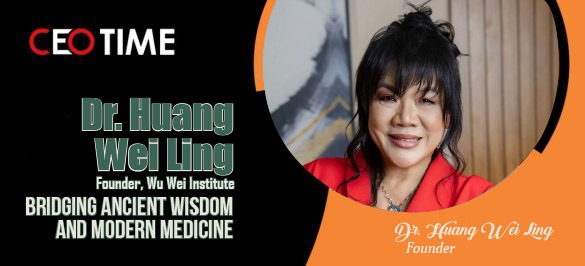
Dr. Huang Wei Ling: Bridging Ancient Wisdom and Modern Medicine
Founder, Wu Wei Institute
For more than three decades, Dr. Huang Wei Ling has dedicated her career to exploring the intersection of conventional Western medicine and traditional healing systems. As the founder of the Wu Wei Institute, she has built a professional journey defined by curiosity, persistence, and a willingness to challenge established perspectives while advocating for a more holistic approach to patient care.
Born in Taiwan and immigrated with her parents to Brazil, Dr. Huang’s story begins long before she entered medical school. Her family’s journey was marked by resilience and sacrifice. Arriving in Brazil after a two-month voyage by sea, they faced significant hardships, including language barriers and limited access to healthcare. During those difficult years, Dr. Huang witnessed her mother’s health struggles and the unwavering faith that helped the family persevere.
“My mother encouraged me to study Traditional Chinese Medicine,” she recalls. “That advice shaped the direction of my entire career.”
Today, Dr. Huang combines her medical background with decades of study in Traditional Chinese Medicine, Acupuncture, Homeopathy, Chinese dietary therapy and Chinese herbal therapy. Through the Wu Wei Institute, she continues to promote an integrated approach to healthcare while sharing her research with physicians and healthcare professionals around the world.
A Career Built on Continuous Learning
After completing her medical residency in Infectious Diseases at the State University of Londrina in Brazil, Dr. Huang began practicing medicine in 1995. Her early career focused on hospital medicine, where she worked with patients suffering from infectious diseases, including HIV/AIDS and hepatitis, while overseeing antimicrobial stewardship programs.
Although her work in conventional medicine was rewarding, she remained eager to broaden her understanding of healthcare. Inspired by her mother’s guidance, she pursued advanced studies in Traditional Chinese Medicine, eventually expanding into Acupuncture, Chinese Herbal Medicine, Chinese dietary counselling, and later Homeopathy.
Rather than viewing these disciplines as competing systems, Dr. Huang saw an opportunity to integrate different schools of thought.
Over the years, she devoted herself to researching how traditional medical philosophies might complement modern clinical practice. That commitment to lifelong learning would become the defining characteristic of her professional journey.
From Clinical Observation to New Perspectives
A pivotal moment arrived in 2006 when Dr. Huang treated a patient experiencing chronic leg pain. After addressing what she describes as the patient’s energetic imbalances through acupuncture and dietary guidance, she observed improvements that extended beyond the original complaint.
The experience encouraged her to investigate broader questions about health and disease.
Since then, Dr. Huang has spent years developing theories that seek to explain disease through a combination of conventional medicine and traditional concepts. She believes that understanding the patient as a whole, rather than focusing exclusively on isolated symptoms, can provide valuable insights into treatment decisions.
Many of her ideas explore the role of the body’s energetic balance, a concept rooted in Traditional Chinese Medicine. While these perspectives are not part of mainstream medical consensus, they have become the foundation of her ongoing research and educational work.
Sharing Knowledge Across the World
Driven by a passion for education, Dr. Huang has become an active contributor to international scientific dialogue. She has authored more than 300 scientific publications and participated in over 500 scientific conferences spanning multiple medical specialties.
Her presentations encourage healthcare professionals to consider broader perspectives when approaching chronic disease and patient care.
“My goal has always been to encourage physicians to investigate the root causes of illness rather than concentrating only on symptom management,” she explains.
Whether speaking at conferences or mentoring fellow practitioners, education remains central to her mission.
Through years of research and clinical experience, she has worked to build a framework that combines principles from Traditional Chinese Medicine, Homeopathy, Ayurvedic Medicine, and Western medicine into what she describes as a more comprehensive approach to understanding health.
The Birth of the Wu Wei Institute
As her research evolved, Dr. Huang recognized the need for an institution that reflected her expanding philosophy.
The organization was renamed the Wu Wei Institute, representing both her personal vision and the concepts she believes are fundamental to her work. According to Dr. Huang, “Wu” symbolizes the five internal organs described in Traditional Chinese Medicine, while “Wei” reflects her own name and the theoretical framework she has developed over decades of research.
Today, the institute serves as both a clinical and educational platform. Beyond patient care, it focuses on physician education, mentoring, scientific writing, and the development of integrative healthcare methodologies.
Dr. Huang believes that future healthcare professionals will benefit from a broader understanding of both conventional medical science and traditional healing philosophies. Through courses, lectures, publications, and mentoring initiatives, the institute seeks to encourage thoughtful discussion about the future of medicine.
For Dr. Huang, innovation has never meant replacing established medicine. Instead, she views innovation as expanding the conversation.
“I believe medicine continues to evolve,” she says. “As our understanding grows, there is always room to ask new questions and explore different perspectives.”
That willingness to question conventional thinking while remaining committed to lifelong learning—continues to define both her career and the vision behind the Wu Wei Institute.
Innovation Through Integration
At the heart of Dr. Huang Wei Ling’s work is a belief that meaningful innovation often emerges from connecting ideas that have traditionally existed in separate worlds. Throughout her career, she has sought to bridge modern Western medicine with ancient medical philosophies, creating what she describes as a more comprehensive framework for understanding health and disease.
Rather than viewing conventional and traditional medicine as opposing approaches, she believes they can complement one another when applied responsibly and thoughtfully. This philosophy has shaped both her clinical practice and the educational initiatives of the Wu Wei Institute.
“I have never wanted to replace modern medicine,” she explains. “My goal has always been to complement it by offering additional perspectives that may help physicians better understand their patients.”
This mindset has encouraged her to question long-held assumptions, revisit historical medical concepts, and examine how traditional principles might contribute to today’s healthcare discussions. Her work reflects a commitment to continuous inquiry an approach she believes is essential in a field that evolves as rapidly as medicine.
A New Direction for the Wu Wei Institute
One of the institute’s primary objectives is physician education.
Recognizing that healthcare professionals are increasingly seeking broader perspectives on patient care, Dr. Huang has developed educational programs designed to introduce practitioners to concepts drawn from Western modern medicine, Traditional Chinese Medicine, Ayurvedic medicine, Homeopathy, and other complementary disciplines.
The institute also serves as a platform for mentoring physicians interested in integrative healthcare approaches. Through lectures, scientific publications, conferences, and professional training, Dr. Huang encourages clinicians to consider patients from a more comprehensive perspective while remaining committed to evidence-informed practice and ongoing learning.
She believes that collaboration not competition is the future of healthcare.
“The more we understand about different medical traditions,” she says, “the more opportunities we create to improve patient care.”
Developing the Wu Wei Protocol
Among the institute’s most significant initiatives is the development of the Wu Wei Protocol, an approach that combines principles from Traditional Chinese Medicine, Ayurvedic medicine and Homeopathy.
According to Dr. Huang, the protocol is intended to address what she describes as energetic imbalances within the body while supporting overall well-being. She views this work as the culmination of decades of clinical observation, research, and study.
The institute is also working toward making related wellness products more broadly available in the future. While these initiatives continue to evolve, Dr. Huang emphasizes that her broader mission extends beyond any single product.
“My objective is to improve quality of life and continue researching new possibilities that may benefit patients,” she says.
For her, innovation is an ongoing journey rather than a final destination.
Leading with Purpose
Leadership, in Dr. Huang’s view, begins with character.
Much of her philosophy has been shaped by lessons learned from her mother, whose values continue to influence both her personal and professional life.
She believes that integrity, compassion, and fairness should guide every decision a leader makes. Success, she says, should never come at the expense of others.
This principle extends throughout her organization.
Dr. Huang strives to create an environment where curiosity is encouraged, independent thinking is respected, and every team member understands the importance of serving patients with empathy and professionalism.
She also believes that optimism plays a critical role in leadership.
Every challenge, she says, offers an opportunity to learn, adapt, and grow. Rather than viewing setbacks as failures, she considers them valuable lessons that contribute to long-term success.
“I believe every experience teaches us something,” she reflects. “Growth comes from our willingness to learn.”
Creating a Culture of Curiosity
Innovation at the Wu Wei Institute is driven by a culture that welcomes questions.
Dr. Huang encourages her team to look beyond conventional solutions and remain open to new possibilities. She believes creativity flourishes when professionals are willing to challenge assumptions while maintaining respect for scientific inquiry and clinical responsibility.
That culture has allowed the institute to explore interdisciplinary research and develop educational resources for healthcare professionals interested in integrative medicine.
Her own career reflects this philosophy.
Over more than thirty years, she has continually expanded her knowledge across multiple medical disciplines rather than limiting herself to a single specialty.
For Dr. Huang, learning never truly ends.
Lessons from a Lifetime of Research
Every career includes moments of uncertainty, and Dr. Huang views those experiences as essential to personal and professional development.
She believes mistakes should never be feared but instead examined carefully for the lessons they provide.
“No one is born knowing everything,” she says. “What matters is learning from each experience.”
This perspective has shaped her resilience as both a physician and entrepreneur.
Developing new ideas often involves skepticism, rigorous evaluation, and persistence. Throughout her journey, she has remained committed to refining her theories while sharing them openly through publications and international conferences.
She understands that progress in medicine requires patience.
History has shown that many influential medical advances initially faced resistance before eventually becoming subjects of broader scientific investigation. While recognizing that new concepts require careful evaluation, she believes continued dialogue and research are essential for advancing healthcare.
Balancing Science, Leadership and Life
Despite an exceptionally busy professional schedule, Dr. Huang places great importance on maintaining personal balance.
Away from her work, she enjoys spending time in nature, particularly in locations surrounded by forests, waterfalls, and natural landscapes. These moments provide an opportunity to reflect, recharge, and reconnect with the values that guide her work.
Her daily routine is remarkably diverse.
In addition to treating patients, she writes scientific papers and books, develops educational programs, prepares conference presentations, mentors physicians, and oversees initiatives at the Wu Wei Institute.
Managing these responsibilities requires careful organization, discipline, and a clear sense of purpose.
For Dr. Huang, however, the motivation remains constant: contributing to the ongoing evolution of healthcare while continuing to learn every step of the way.
Looking Ahead
For someone who has spent more than three decades researching, practicing, and teaching, Dr. Huang Wei Ling believes the most important chapters of her journey are still ahead.
Among her latest milestones is the completion of her first book, Cancer Begins Before the Tumor, in which she presents her perspective on the importance of addressing the broader biological environment surrounding disease alongside conventional cancer care. Through the book, she aims to encourage discussion about prevention, patient-centered care, and integrative approaches to health while sharing the ideas that have shaped her years of clinical observation.
The publication represents another step in her long-standing commitment to education. Throughout her career, Dr. Huang has viewed knowledge as something that should be shared, refined, and continuously questioned rather than confined to academic settings.
Beyond publishing, the Wu Wei Institute continues to expand its educational initiatives, including physician mentoring, scientific writing, professional training, and the development of new resources for healthcare practitioners interested in integrative medicine. These efforts reflect Dr. Huang’s belief that learning is a lifelong process and that meaningful progress comes through collaboration and open dialogue.
She is also working toward introducing the Wu Wei Protocol and related wellness initiatives to a broader audience in the future. While these projects remain part of the institute’s long-term vision, her primary focus continues to be advancing education, encouraging research, and fostering conversations about the future of healthcare.
A Vision Grounded in Purpose
Throughout every stage of her career, one theme has remained constant: purpose.
Dr. Huang often speaks about viewing medicine as both a science and a lifelong responsibility to serve others. Her work has been shaped by persistence, faith, and a willingness to explore ideas beyond conventional boundaries while remaining committed to helping patients and educating fellow professionals.
She believes healthcare will continue to evolve as new discoveries reshape our understanding of disease, prevention, and treatment. For future generations of physicians, she hopes curiosity will remain as important as technical expertise.
“Medicine has always evolved,” she says. “Every generation contributes something new to those that follow.”
Her perspective extends beyond healthcare. She encourages leaders in every profession to remain resilient, particularly when pursuing ideas that challenge accepted thinking.
Innovation, she believes, requires courage, not only to ask difficult questions but also to continue learning throughout one’s career.
Defining Success Beyond Recognition
Although Dr. Huang’s accomplishments include hundreds of scientific publications, presentations at international conferences, and decades of clinical experience, she measures success differently.
For her, success is reflected in the ability to improve lives, inspire learning, and encourage others to think more broadly about the challenges they face.
It is also reflected in the physicians she mentors, the patients she serves, and the conversations her work continues to inspire across different medical communities.
This people-first philosophy has become a defining characteristic of the Wu Wei Institute. Rather than focusing solely on organizational growth, the institute emphasizes education, professional development, and creating opportunities for meaningful dialogue across medical disciplines.
Dr. Huang believes that every healthcare professional has a responsibility to continue learning, regardless of experience or specialization.
“The day we believe we know everything,” she says, “is the day we stop growing.”
Lessons for Future Leaders
Reflecting on her journey, Dr. Huang offers a message that extends well beyond medicine.
She encourages aspiring entrepreneurs, researchers, and professionals to embrace challenges as opportunities for growth. Every obstacle, she believes, carries a lesson that contributes to personal development and long-term success.
Equally important is staying true to one’s values.
Integrity, compassion, humility, and respect remain the principles she strives to bring into every decision, whether treating patients, leading her organization, or mentoring the next generation of professionals.
She also emphasizes the importance of perseverance.
Throughout history, many transformative ideas have required years or even decades before gaining broader acceptance. While acknowledging that new concepts must be rigorously examined and supported through ongoing research, she believes meaningful progress often begins with the courage to explore new possibilities.
For Dr. Huang, leadership is not about following trends but about remaining committed to a vision while continuing to learn, adapt, and serve.
A Legacy of Lifelong Learning
As healthcare continues to evolve, Dr. Huang Wei Ling hopes her greatest contribution will not be defined by a single theory, publication, or institution, but by inspiring others to approach medicine with curiosity, openness, and compassion.
Her journey from the daughter of Taiwanese immigrants in Brazil to physician, researcher, educator, author, and founder of the Wu Wei Institute, reflects a career built on resilience and an enduring commitment to learning.
Whether through patient care, scientific publications, international lectures, or educational programs, she has dedicated her professional life to exploring new perspectives and encouraging thoughtful dialogue about the future of healthcare.
Ultimately, her story is one of conviction: the belief that progress begins with asking questions, that leadership grows through service, and that every generation has an opportunity to expand humanity’s understanding of health and healing.
As she continues to write, teach, and mentor, Dr. Huang remains focused on the future, not simply on advancing her own work, but on contributing to a broader conversation about how medicine can continue to evolve in an ever-changing world.
For the Wu Wei Institute, that journey is only beginning.