


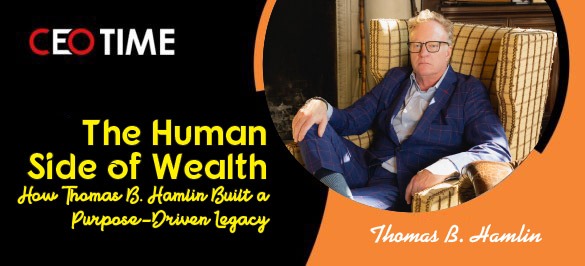
The Human Side of Wealth: How Thomas B. Hamlin Built a Purpose-Driven Legacy
In an industry often defined by numbers, quarterly performance metrics, and short-term gains, Thomas B. Hamlin has spent more than three decades quietly redefining what success truly means. As the founder and chief executive officer of Somerset Wealth Strategies LLC, Hamlin’s influence extends far beyond financial outcomes. His work has been guided by a deeply rooted conviction: that leadership is ultimately a moral responsibility, measured not by assets under management, but by the lives improved through wisdom, integrity, and service.
At a time when the financial services sector often prioritizes scale over substance, Hamlin has consistently chosen a different path, one grounded in purpose. His philosophy challenges conventional definitions of success and instead places human impact at the center of professional achievement.
Hamlin often reflects on a belief that has shaped both his personal and professional life:
“As you move through life, it’s of the utmost importance to remember that a true man, his character and his success, are not measured by the thickness of his wallet. Your character and success are measured by the good and great deeds that you perform and the value you add in the lives you touch. The ultimate goal is to touch as many lives as possible, not so that your name will be held high, but so that you know, and God knows, that you did all that you and He could ever hope that a single human could achieve.”
This philosophy is not merely aspirational; it has served as the foundation upon which Hamlin built his career and his company.
From Early Lessons to Enduring Principles
Hamlin’s professional journey did not begin in wealth management, but in roles that instilled discipline, resilience, and an appreciation for human connection. In the mid-1980s, he worked as a territory manager for Breyers Ice Cream in California. It was here that he first encountered the realities of performance accountability and customer trust.
Managing distribution channels and maintaining relationships with retailers required more than operational efficiency, it demanded consistency, reliability, and a commitment to delivering value. These early experiences laid the groundwork for what would later become a defining element of his leadership style: the belief that trust is earned over time and sustained through integrity.
Hamlin’s subsequent venture into real estate further refined his professional instincts. Working closely with clients during some of the most significant financial decisions of their lives, he developed a keen ability to listen, negotiate, and advocate. Real estate, like financial advisory, is inherently personal, it requires understanding not just numbers, but aspirations, fears, and long-term goals.
These formative years helped Hamlin recognize a fundamental truth: success in any client-centered profession is built on relationships, not transactions.
The Birth of a Purpose-Driven Firm
When Hamlin founded Somerset Wealth Strategies LLC, he did so with a clear vision, to create a firm that would prioritize people over portfolios. While many firms emphasized rapid growth and aggressive acquisition, Hamlin focused on cultivating lasting relationships rooted in trust and transparency.
From its inception, Somerset Wealth Strategies was designed to operate differently. Clients were not viewed as accounts, but as individuals with unique stories, values, and aspirations. Financial planning, in Hamlin’s view, was not just about managing wealth, it was about guiding lives.
This approach required patience and discipline. Building deep, trust-based relationships takes time, and it often stands in contrast to the fast-paced nature of the financial industry. Yet, Hamlin remained steadfast in his commitment to a long-term vision, believing that sustainable success could only be achieved through genuine service.
Under his leadership, the firm grew steadily, attracting clients who valued a more thoughtful and personalized approach to wealth management. More importantly, it fostered a culture where advisors were encouraged to see their work as a calling rather than a transaction.
Leadership as a Moral Exercise
For Hamlin, leadership is not defined by authority, but by responsibility. He views it as a moral exercise, one that requires humility, accountability, and a genuine desire to serve others.
This perspective has shaped not only his interactions with clients but also his approach to mentoring and team development. Within Somerset Wealth Strategies, leadership is cultivated through example. Advisors are encouraged to prioritize ethical decision-making, long-term thinking, and meaningful client engagement.
Hamlin’s emphasis on character over metrics has created an organizational culture that values integrity as much as performance. In an industry where pressure to deliver short-term results can sometimes overshadow ethical considerations, this approach stands out.
He believes that true leadership is reflected in the impact one has on others, whether through guidance, support, or simply being present during critical moments in a client’s life. It is this belief that continues to guide his decisions and define his legacy.
Redefining Success in Financial Services
One of Hamlin’s most significant contributions to the financial services industry is his redefinition of success. Rather than focusing solely on financial outcomes, he has consistently emphasized the importance of personal impact.
For many advisors, success is measured in terms of assets under management or annual returns. While these metrics are undeniably important, Hamlin argues that they represent only part of the picture. True success, he suggests, lies in the ability to improve lives, helping clients achieve not just financial security, but peace of mind and a sense of purpose.
This philosophy has resonated deeply with clients and colleagues alike. It has also positioned Somerset Wealth Strategies as a firm that prioritizes long-term relationships over short-term gains.
By aligning financial planning with personal values, Hamlin has demonstrated that it is possible to achieve both professional excellence and meaningful impact.
The Human Side of Wealth
At the core of Hamlin’s approach is a recognition that wealth is inherently human. Behind every portfolio is a story, families, dreams, challenges, and aspirations.
Understanding this human dimension is essential to effective financial planning. It requires empathy, patience, and a willingness to engage in conversations that go beyond numbers.
Hamlin’s ability to connect with clients on a personal level has been a key factor in his success. By taking the time to understand their goals and values, he has been able to provide guidance that is both practical and meaningful.
This approach not only strengthens client relationships but also enhances the overall effectiveness of financial strategies. When planning is aligned with personal values, it becomes more than a technical exercise, it becomes a pathway to achieving a fulfilling life.
A Legacy of Impact
As Hamlin reflects on more than three decades in the industry, his legacy is defined not by the size of his firm, but by the impact he has had on others.
Through his work, he has helped countless individuals and families navigate complex financial decisions, build secure futures, and pursue their aspirations with confidence. More importantly, he has demonstrated that success in financial services does not have to come at the expense of integrity or purpose.
His journey serves as a powerful reminder that leadership is not about recognition, but about responsibility. It is about using one’s skills and influence to create positive change, one relationship at a time.
Looking Ahead
Even after decades of success, Hamlin remains focused on the future. His commitment to continuous learning and growth ensures that he and his firm remain responsive to the evolving needs of clients.
At the same time, his core philosophy remains unchanged. In a rapidly changing industry, where technology and innovation are reshaping the landscape, Hamlin continues to emphasize the importance of human connection.
For him, the future of financial services lies not just in advanced tools and strategies, but in the ability to build trust and deliver meaningful value.
Conclusion
In a world where success is often equated with wealth and status, Thomas B. Hamlin offers a different perspective, one that prioritizes character, service, and impact.
His career stands as a testament to the power of purpose-driven leadership. By focusing on the lives he touches rather than the wealth he accumulates, Hamlin has redefined what it means to succeed in the financial services industry.
Ultimately, his story is not just about professional achievement, it is about the enduring value of integrity, compassion, and a commitment to making a difference.