


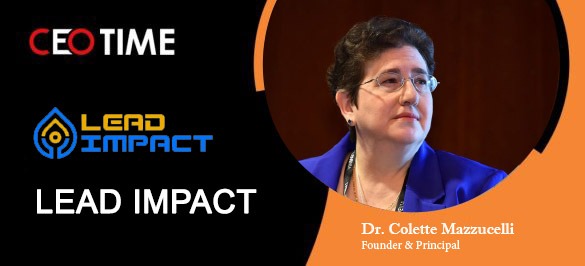
Founder & Principal, LEAD IMPACT Reconciliation Institute LLC; Member, Pacific Council on International Policy
The LEAD Impact Migration Sentinel System (LIMSS) reflects a new way of thinking about migration as a dynamic risk that develops over time across an increasingly interconnected world rather than simply as a crisis that occurs suddenly at a border. In recent years, migration pressures affecting Europe, the United States, and countries across the Global South have shown that waiting to respond after displacement has already occurred is often too late. Climate shocks, geopolitical conflict, economic instability, weakened institutions, and governance challenges interact and build gradually, creating ripple effects that extend far beyond any single country or region. LIMSS is shaped by this reality, seeking to help institutions better understand and prepare for migration-related risks before they escalate into humanitarian, economic or security crises. Rather than viewing migration only as an outcome that appears suddenly at borders or within communities, LIMSS focuses on recognizing early signs of pressure and vulnerability that tend to precede large-scale displacement. Notably, this reflects a broader shift in how technology is being used across research, policy, and practice, to move away from reactive decision-making and toward foresight-driven awareness. By responsibly leveraging artificial intelligence (AI), LIMSS aims to enhance situational awareness and support earlier insight into complex social systems that are often difficult to observe through traditional approaches alone. These early insights are especially valuable in a world where risks can compound quickly and where delayed responses often come at a much higher human and economic cost. Specifically, delayed or fragmented responses to migration pressures can have far-reaching consequences, affecting local and regional economies, public services, social cohesion, and broader security conditions in both transit and destination regions. LIMSS contributes to a growing body of work that emphasizes the importance of proactive, ethically grounded approaches to migration governance, approaches that prioritize early understanding, responsible use of technology, and preparedness over crisis management. In doing so, LIMSS seeks to enable more informed decision-making that improves preparedness and supports timely, coordinated action as global migration risks continue to evolve. LIMSS is a practical initiative that speaks to intechgrative learning, a concept introduced by Dr. Colette Mazzucelli.
Colette Mazzucelli, MALD, EdM, PhD, HonD, a lifetime member of the Pacific Council on International Policy, teaches core and elective courses in the New York University School of Professional Studies Master of Science in Global Affairs (MSGA) Program, including international relations in the post-Cold War era, Europe in the 21st Century, and ethnic conflict. She is a recipient of the NYU SPS Excellence in Teaching Award (2013). Professor Mazzucelli served as the Inaugural President (Academia), Global Listening Centre (2020-22). She participated in the Parallel Histories conference in the House of Lords and the CFR-Lumina Foundation Global Literacy Advisory Group at the Council on Foreign Relations. Her diplomatic experience includes hosting the International Visitor Leadership Program (IVLP) to welcome Visiting Delegations to New York University in cooperation with the U.S. Department of State. She engages with diverse organizations, including the Bled Strategic Forum, the BMW Foundation Responsible Leaders Network, and the Paris Peace Forum. The Founder and Principal of LEAD IMPACT, she is the Editor of the Anthem Press Ethics of Personal Data Collection Series. Mazzucelli is the author and/or editor of 5 books, including France and Germany at Maastricht Politics and Negotiations to Create the European Union, Mapping Transatlantic Futures, and Personal Data Collection Risks in a Post-Vaccine World with 3 more forthcoming, notably, Transatlantic Tomorrows: Foreign Policy Lessons Learned, Climate Justice Concerns in the Distributed Ecosystem Environmental Case Studies in Comparative Perspective, and Personal Data on the Interrupted Path to Peace: Intechgrativism in a Fragmented World. Professor Mazzucelli is an alumna of the Brandeis University Summer Institute for Israel Studies. In 2016, she was named an Honorary Ambassador of Peace in recognition of her service as an educator with over 25 years’ experience in technology-mediated learning. For Pioneer Academics, she mentors talented high-school students on 5 continents who aspire to pursue their undergraduate education at leading North American institutions of higher learning. A Fulbright Scholar to France (1991) and Germany (2007), Professor Mazzucelli is a contributor to and peer reviewer for numerous academic journals. Her courses have been profiled by the Council on Foreign Relations in Foreign Affairs as well as the CFR Educators Bulletin. As the recipient of 11 fellowships in 7 countries, she is a recipient of the Marquis Who’s Who Lifetime Achievement Award (2018). She was invited to participate in Canada’s first training program on the prevention of mass atrocities and genocide by the Montreal Institute for Genocide and Human Rights Studies, Concordia University. She has spoken on panels commemorating the fiftieth anniversary of the Élysée Treaty of Friendship between France and Germany (1963-2013) by the French and German Embassies in Washington and the French and German Consulates General in Boston. During 2000-03, she was responsible to direct and teach the first technology-mediated seminar in the history of the Institute of Political Studies (Sciences Po) Paris analyzing conflict in the former Yugoslavia. Professor Mazzucelli is a former Director, International Programs, Budapest Institute for Graduate International and Diplomatic Studies, Budapest University of Economic Sciences, 1995-97. As a participant in the Robert Bosch Foundation Fellowship Program for Future American Leaders, she assisted with the ratification of the Treaty on European Union (“Maastricht”) in the Federal Republic of Germany, 1992-93.
Dr. Levino L. Johnson Jr. is a scholar-practitioner specializing in global affairs, transnational migration, and national security. He is a Researcher with Thomson Reuters Special Services. As LEAD IMPACT’s Director of Transnational Migration, Dr. Johnson conceived of LIMSS as an AI initiative at the intersection of transnational security and strategic foresight. Dr. Johnson earned his PhD in Public Policy and Administration from Walden University, an MS in Global Affairs and International Relations from New York University, and an MPA from the University of Colorado. His career spans both federal and private sectors, where he has contributed to and co-authored federal publications on international affairs, transnational migration, and the policy implications for emerging technologies. A U.S. Army veteran with operational experience in combat theaters, Dr. Johnson’s research integrates practical insight with academic inquiry.
Cire Wang is an undergraduate researcher specializing in surveillance systems, migration governance, and contemporary China studies. Currently a first-year Honors student at the University of North Carolina at Chapel Hill, he is double majoring in Anthropology and Management & Society (Sociology) while serving as Humanities Editor for JOURney (Journal of Undergraduate Research). As a Research Associate with the LIMSS Initiative, Cire is responsible for testing different iterations of the Migration Sentinel System. In addition, he explores how AI and data analytics impact quantifiable studies of migration patterns and security frameworks. His research portfolio includes work as a research assistant examining reproductive politics in China, comparative migration systems, and surveillance infrastructure, integrating computational methods with ethnographic approaches. He has previously interned with UNESCO’s International Center on Space Technology for Natural and Cultural Heritage and Peking University’s Research Center for Digital Humanities, and apprenticed with one of 16 living practitioners of Ming Dynasty Ye-black pottery traditions, developing VR preservation tools. Cire’s interdisciplinary methodology combines quantitative data analysis and AI-driven insights with traditional ethnographic fieldwork to examine social transformations and their impacts on marginalized communities.